
Repetitive Stress Injury (RSI) Treatment in Wantirna
That nagging elbow pain that won't go away. The burning sensation in your wrist after a day at the computer. The ache in your shoulder that started months ago and just keeps getting worse.
If you do the same movements day after day—at work, in the gym, or at home—your body is sending you a message.
At Nudge Osteopathy in Wantirna, we have seen numerous repetitive stress injuries (RSI). We understand the frustration of pain that limits your work, your hobbies, and your daily life. Our approach addresses not just where it hurts, but why—and what needs to change for lasting relief.
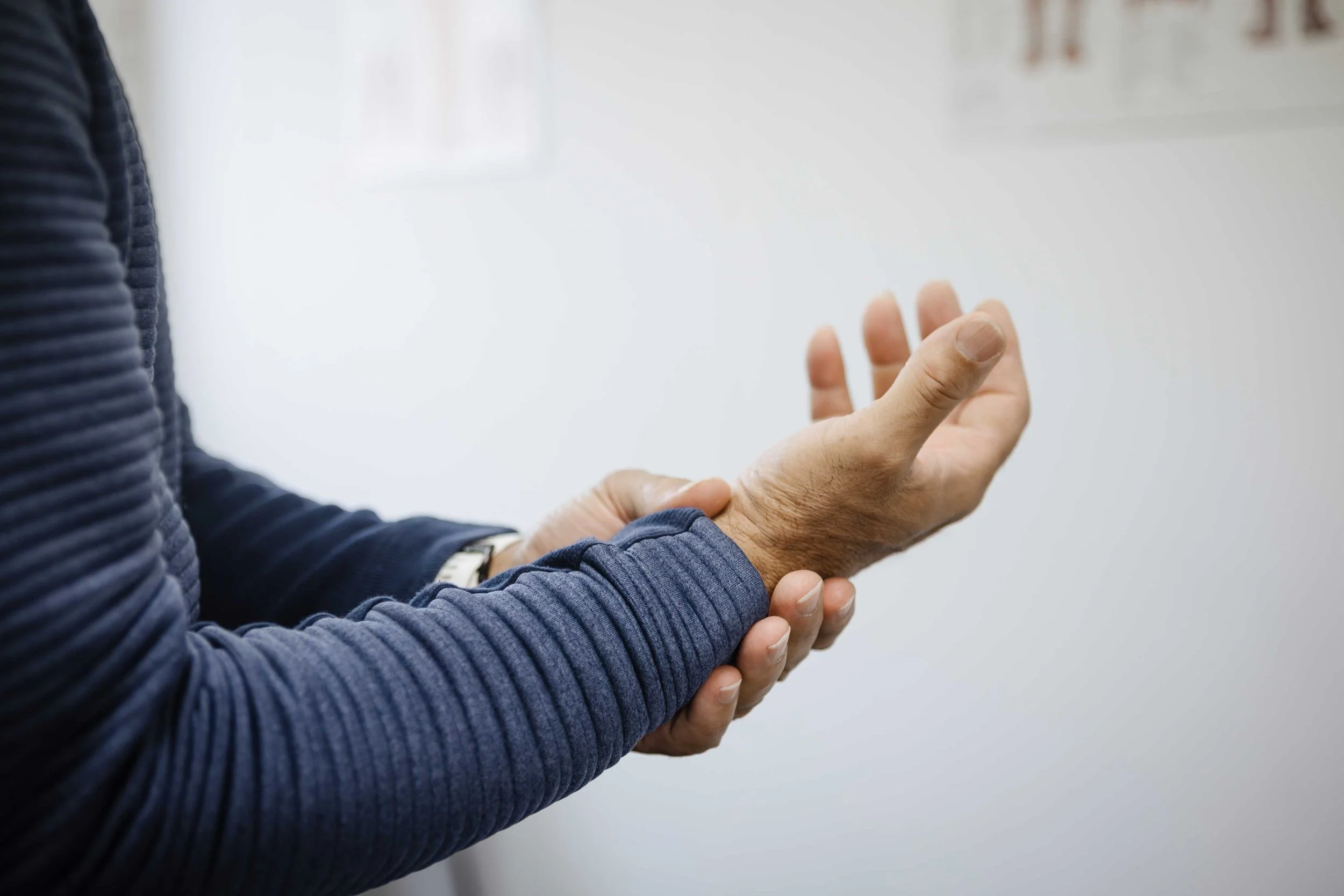
Why Choose Nudge Osteopathy for RSI?
✅ Years of experience in overuse conditions and workplace injuries
✅ Thorough assessment of biomechanics, posture, and contributing factors
✅ Practical ergonomic advice—we help you modify your workstation and habits
✅ Hands-on treatment combined with specific rehabilitation exercises
✅ Convenient Wantirna location—serving Knox, Boronia, Bayswater & Eastern suburbs
✅ HICAPS available—instant private health rebates

What Is Repetitive Stress Injury?
Repetitive stress injury (RSI)—also called repetitive strain injury or overuse syndrome—describes a range of conditions caused by repeating the same movements over long periods or maintaining static postures for too long.
Your body is remarkably adaptable, but it has limits. When you repeatedly demand the same movement from the same muscles, tendons, and joints without adequate recovery, tissues become irritated, inflamed, and eventually damaged.
Repetitive movements: Hundreds or thousands of similar actions daily
Awkward postures: Working with wrists bent, shoulders raised, or head forward
Static loading: Holding muscles contracted for extended periods
Insufficient rest: No variation or recovery time
Forceful exertions: Gripping tools, heavy keying, lifting
Vibration: Using vibrating tools or equipment
Poor ergonomics: Ill-fitted workstation, chair, or equipment
Stress: Physical tension increases with mental stress
Common RSI Risk Factors:
Common RSI Conditions We Treat
Upper Body
-
Pain on the outside of your elbow. Not just for tennis players—caused by repetitive gripping, lifting, or computer mouse use. Tendons attaching to the lateral epicondyle become overloaded and painful.
-
Pain on the inside of your elbow. Common in golfers, but also in workers who grip tools, construction workers, and those performing repetitive wrist flexion.
-
Numbness, tingling, or burning in your thumb, index, and middle fingers. Caused by compression of the median nerve as it passes through the carpal tunnel in your wrist. Often worse at night.
-
Pain at the base of your thumb, especially when grasping or twisting. Common in new parents (from lifting baby), hairdressers, and those using phones extensively.
-
Diffuse aching, burning, or weakness in the forearm. Often described as "my whole arm hurts." Can involve multiple muscle groups and tendons.
-
Compression of nerves or blood vessels between your neck and shoulder. Causes arm pain, numbness, and sometimes swelling or colour changes. Common in those with poor posture and repetitive overhead work.
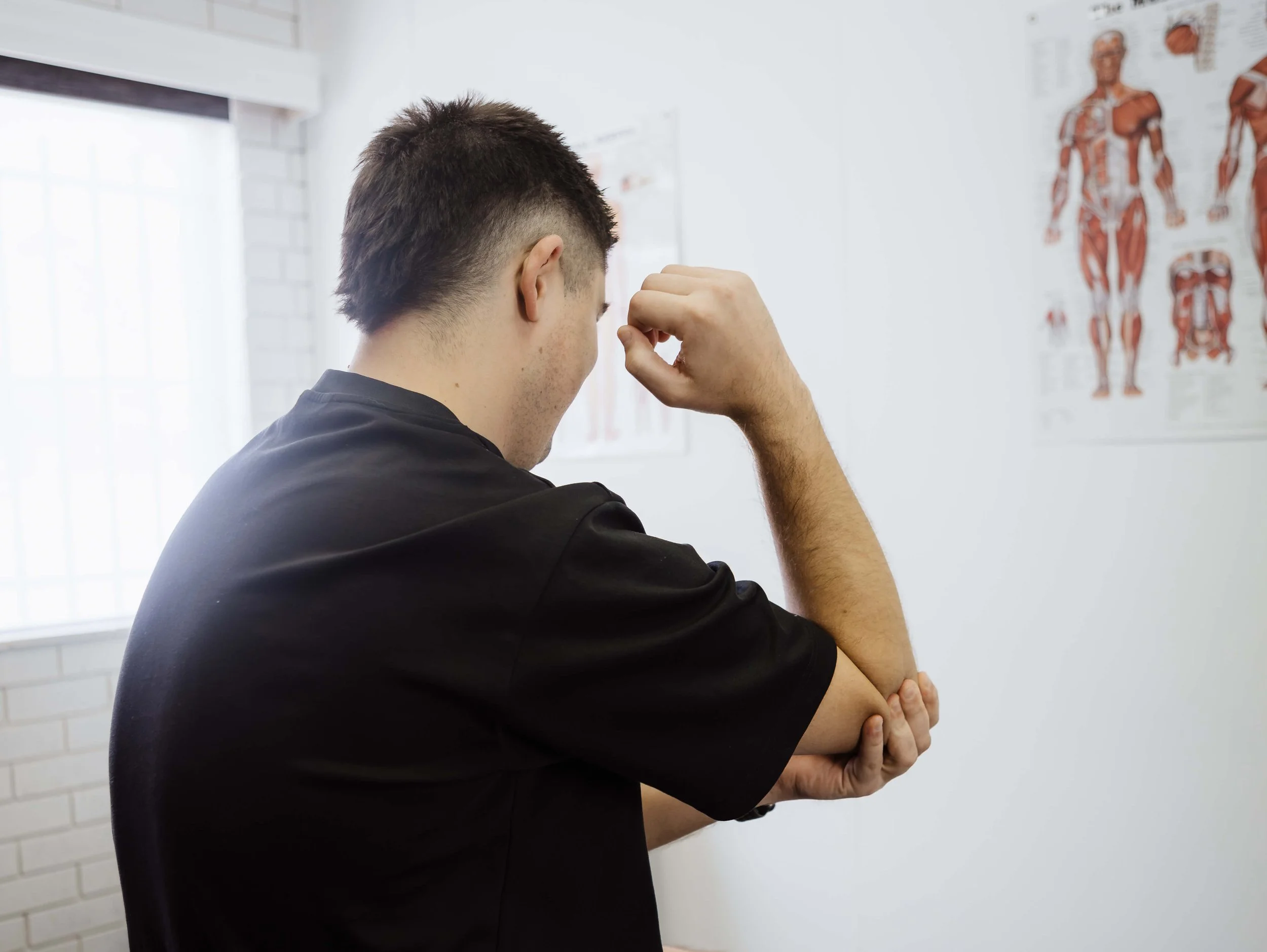
Common RSI Conditions We Treat
Lower Body
-
Pain and stiffness in the Achilles tendon (back of ankle). Common in runners and those who stand for long periods.
-
Heel pain, especially with first steps in the morning. Caused by repetitive strain on the plantar fascia (the thick band across the bottom of your foot).
-
Pain just below the kneecap. Common in sports involving jumping, but also in occupations with frequent kneeling or squatting.
-
Pain along the shin bone. Common in runners, dancers, and those who suddenly increase walking/running load.
-
Pain on the outside of the knee. Caused by friction of the iliotibial band against the thigh bone. Common in runners and cyclists.
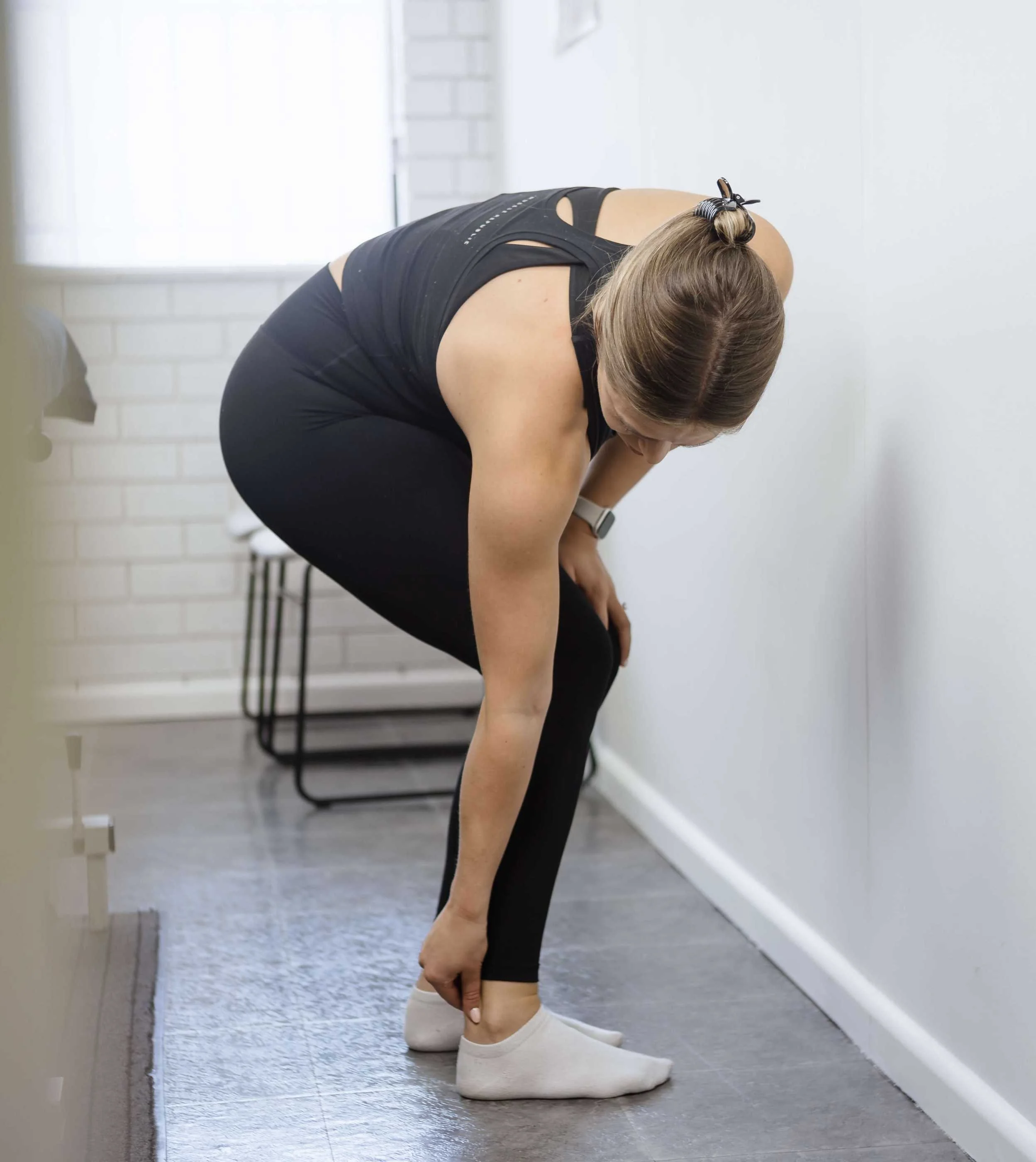
Occupational RSI: Pain By Profession
-
Mouse arm / computer arm
Carpal tunnel syndrome
Tennis elbow
Upper back and neck tension
Postural strain from poorly set up workstations
Our approach: Ergonomic assessment, postural re-education, specific stretches for desk workers, and treatment of affected tissues.
-
Tennis/golfer's elbow from gripping tools
Shoulder tendinopathy from overhead work
Hand and wrist RSI from vibrating tools
Low back strain from repetitive lifting
Our approach: Technique modification, tool assessment, strengthening for job demands, and manual therapy.
-
Thumb pain (De Quervain's) from patient handling
Low back RSI from repetitive bending
Neck and shoulder tension
Our approach: Body mechanics education, treatment of affected areas, and strategies for self-care.
-
Hand and wrist RSI from scissors and tools
Shoulder and neck pain from sustained postures
Thumb and finger strain
Our approach: Tool assessment, ergonomic modifications, specific exercises, and hands-on treatment.
-
De Quervain's tenosynovitis ("mother's thumb") from lifting baby
Low back strain from repetitive lifting and bending
Shoulder tension from carrying
Our approach: Safe lifting techniques, supportive strategies, and treatment for affected areas.
-
Hand and forearm RSI from repetitive practice
Neck and shoulder tension from instrument position
Focal dystonia (in severe cases)
Our approach: Playing posture assessment, technique modification, and targeted treatment.
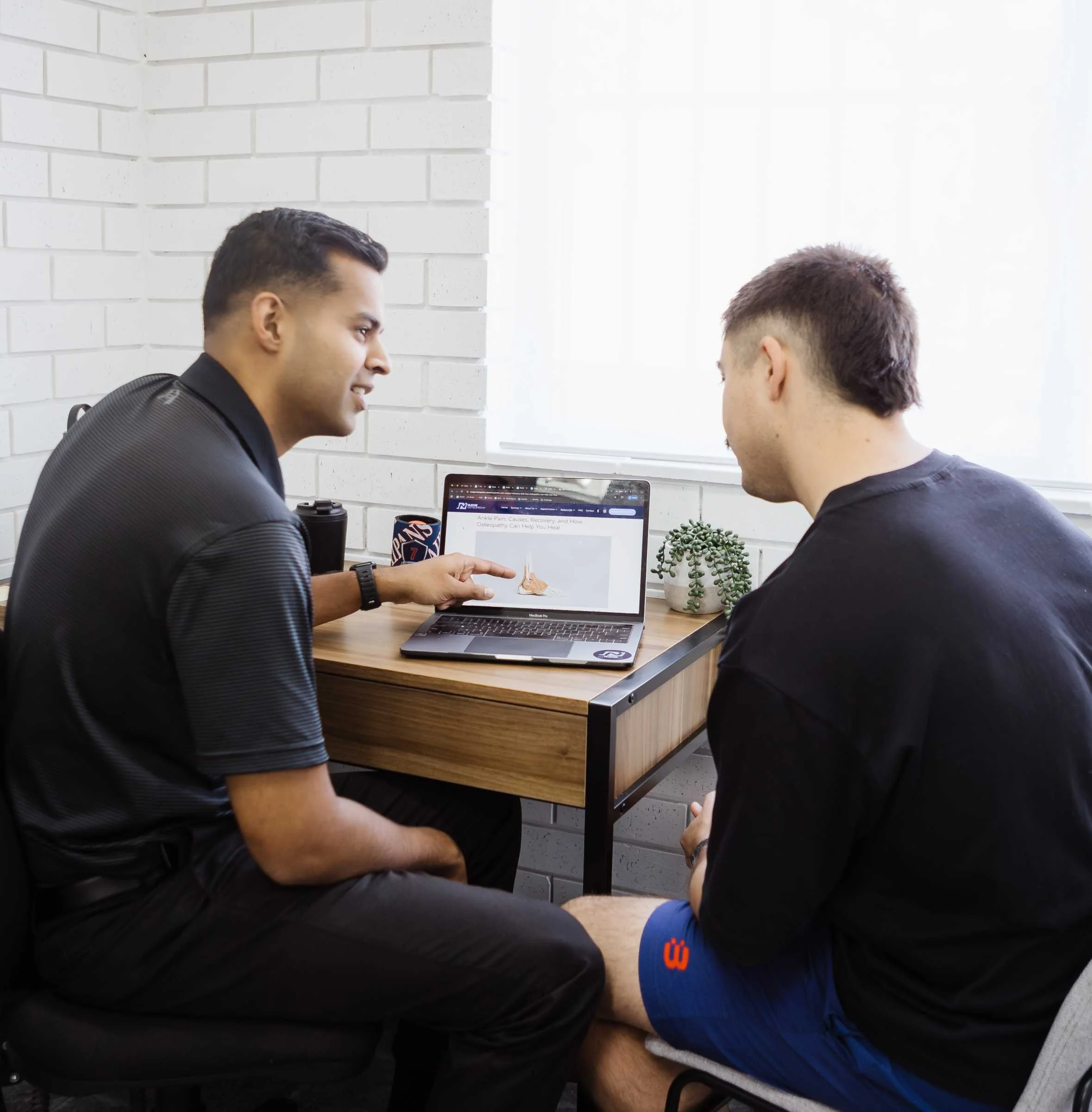
Our 3-Phase Approach to RSI
Phase 1: Comprehensive Assessment (Your First Visit)
Phase 1: Comprehensive Assessment
Your first appointment is 60 minutes. With RSI, understanding why is critical.
We'll assess:
Your pain—location, quality, aggravating and easing factors
Your work, hobbies, and daily activities in detail
Your posture—at rest, at work, during specific tasks
Your workstation or equipment setup (bring photos!)
Your joint range of motion and muscle function
Specific orthopaedic tests for your suspected condition
Neurological screening if nerve involvement is suspected
Muscle imbalances—tightness in some areas, weakness in others
You'll leave knowing:
What structure is irritated
What activities are contributing
What changes will help
Your personalised treatment plan
Expected recovery timeline
Phase 2: Personalised Treatment
Your treatment plan addresses both the affected tissues and the underlying causes.
Manual Therapy Techniques:
For Soft Tissue:
Deep tissue massage: Releasing tight, fibrotic, or adhered muscle tissue
Myofascial release: Addressing restrictions in the connective tissue
Trigger point therapy: Deactivating hypersensitive points within muscles
Cross-friction massage: For chronic tendinopathies (tennis elbow, etc.)
For Joints:
Mobilisation: Restoring normal movement to stiff joints (wrist, elbow, shoulder, etc.)
Articulation: Rhythmic movement to improve joint nutrition and mobility
Muscle energy technique: Using muscle contractions to release restrictions
For Nerve Involvement:
Neural mobilisation: Techniques to free compressed or adhered nerves (median nerve for carpal tunnel, etc.)
Exercise & Rehabilitation:
Eccentric exercises: The gold standard for tendinopathy—lengthening a muscle under load
Stretching: For tight, shortened muscles
Strengthening: For weak stabilisers that should be sharing the load
Nerve gliding: For conditions involving nerve compression (carpal tunnel, etc.)
Movement retraining: Changing how you perform specific tasks
Ergonomic & Lifestyle Modifications:
Workstation assessment: Screen height, chair setup, keyboard/mouse position, phone use
Tool assessment: Grip size, weight, vibration, technique
Activity pacing: Balancing activity with recovery
Task variation: Introducing different movements throughout your day
Microbreaks: Structured short breaks before pain begins
Phase 3: Long-Term Management & Prevention
With RSI, prevention is everything. Once you've recovered, we help you stay recovered.
We equip you with:
A maintenance exercise program
Understanding of your early warning signs
Ergonomic principles you can apply anywhere
Strategies for managing workload and recovery
A plan for when to check in if symptoms begin returning
When to See an Osteopath for RSI
Book an appointment if:
You have pain that persists beyond a few days
Your pain is affecting your work or daily activities
You're noticing numbness, tingling, or burning
You've modified your activities but pain continues
You're worried something more serious is wrong
You want to prevent a minor ache becoming a chronic problem
Seek immediate medical attention if:
You have sudden, severe weakness in a hand or arm
You have sudden colour changes in your fingers (pale, blue)
You have significant swelling, redness, or heat (possible infection)
You have symptoms in both arms or legs simultaneously (possible systemic condition)
When in doubt, call us. We're happy to advise.
FAQs
"I've had tennis elbow for 8 months. Is it too late to treat?"
1
Not at all. Chronic tendinopathy requires a different approach than acute injuries—but it absolutely can improve. We focus on loading the tendon appropriately (eccentric exercise) while addressing contributing factors like grip strength, wrist position, and shoulder stability.
"Do I need to stop working to recover from RSI?"
2
Not necessarily. Complete rest rarely works for RSI—the pain returns when you resume activity. Instead, we focus on modifying how you work, improving your setup, and gradually loading tissues to build tolerance. Most patients continue working throughout treatment.
"Is carpal tunnel syndrome always surgical?"
3
No. Many cases of carpal tunnel syndrome respond well to conservative care—especially when caught early. We use neural mobilisation, ergonomic modifications, and activity modification. Surgery is considered when conservative measures fail or if there's progressive nerve damage.
"I'm a tradie. Will osteopathy actually help with my job demands?"
4
Yes—and we understand that "stop using your tools" isn't realistic. We focus on technique modification, tool assessment (vibration, grip size), strengthening supporting muscles, and treatment between jobs. Many tradies see us for regular maintenance.
"How do I know if my workstation is causing my pain?"
5
We can help you assess this. Bring photos of your setup—sitting and standing. We'll look at screen height, chair position, keyboard/mouse placement, and your posture while working. Small changes often make significant differences.
Our Wantirna Location
We're conveniently located in Wantirna, serving:
Local suburbs: Wantirna, Wantirna South, Boronia, Bayswater, Knoxfield, Scoresby, Ferntree Gully, Rowville, Vermont, and surrounding Eastern Melbourne suburbs
Nearby landmarks: Westfield Knox, Wantirna Health, Eastland Shopping Centre, Aquanation
Parking: Free, easy-access parking available right outside
Don't Let RSI Become Chronic
Repetitive stress injuries have a way of creeping up on you. What starts as a minor ache becomes a persistent annoyance, then a limitation, then something that affects your work and quality of life.
The earlier you address RSI, the better the outcome.
Our Wantirna osteopaths are here to help you understand your pain, treat its cause, and make the changes needed for lasting relief.
📞 Call us today: (03) 9720 2640
📧 Email: niraj@nudgeosteopathy.com
📍 Visit: 6B The Mall, Wantirna VIC 3152
Have more questions? Visit our FAQ or Contact Us.
Related Conditions We Treat
Medical Disclaimer
This information is for educational purposes only and is not a substitute for professional medical advice, diagnosis, or treatment. Always seek the advice of your osteopath, physician, or other qualified health provider with any questions you may have regarding a medical condition.