
Arthritis Pain Relief & Ongoing Care in Wantirna
If you're living with arthritis, you know the pattern all too well. Stiffness in the morning that takes an hour to loosen. Pain that flares up after activity. Joints that feel creaky, swollen, or simply worn out. The fear that things will only get worse.
Here's what we want you to know: Arthritis doesn't have to mean a life of pain and limitation.
At Nudge Osteopathy in Wantirna, we have experience in helping people with arthritis move better, hurt less, and maintain their independence. We can't reverse arthritis—but we can help you manage it, stay active, and protect your joints for the long term.
Why Choose Nudge Osteopathy for Arthritis Care?
✅ Experience working with arthritic patients of all ages
✅ Arthritis-appropriate techniques—no forceful manipulation
✅ Focus on maintaining mobility and independence
✅ Drug-free pain relief—complementary to your medical care
✅ Long-term support for ongoing joint health
✅ Convenient Wantirna location—serving Knox, Boronia, Bayswater & Eastern suburbs
✅ HICAPS available—instant private health rebates
Understanding Arthritis
Arthritis isn't one condition—it's an umbrella term for more than 100 different types of joint inflammation. The two most common forms we see are:
Sometimes called "wear and tear" arthritis—though it's more complex than that. The smooth cartilage that cushions your joints gradually breaks down. The joint space narrows. Bone may rub on bone. Bony spurs (osteophytes) may develop.
Common sites: Knees, hips, hands, spine (especially lower back and neck)
Who gets it: More common as we age, but also affects younger people with previous joint injuries, repetitive loading, or genetic predisposition
Symptoms:
Pain that worsens with activity, improves with rest
Morning stiffness lasting less than 30 minutes
Creaking or grating sensation (crepitus)
Bony enlargement of joints
Reduced range of motion
Osteoarthritis (OA)
An autoimmune condition where your immune system attacks the lining of your joints (the synovium). This causes inflammation, pain, and eventually can damage cartilage and bone.
Common sites: Often symmetrical—affecting the same joints on both sides of the body. Hands, wrists, feet, knees.
Who gets it: Can affect any age, more common in women
Symptoms:
Pain and swelling in multiple joints
Morning stiffness lasting more than 30 minutes (often hours)
Fatigue, fever, weight loss (systemic symptoms)
Flares and remissions
Rheumatoid Arthritis (RA)
Other Types We See
Psoriatic arthritis—associated with psoriasis
Gout—caused by uric acid crystals in joints (often the big toe)
Ankylosing spondylitis—primarily affects the spine
Post-traumatic arthritis—developing after joint injury
How Osteopathy Helps with Arthritis
We can't cure arthritis. But we can help you manage it—often significantly improving your quality of life.
1. Pain Relief
Through hands-on techniques, we can reduce pain signals, ease muscle tension around affected joints, and improve local circulation.
2. Improved Joint Mobility
Arthritic joints stiffen. We use mobilisation techniques to maintain as much range of motion as possible—helping you bend, walk, and move more easily.
3. Reduced Muscle Tension
When a joint hurts, the muscles around it tighten to protect it. This protective spasm actually increases pain and restricts movement further. We release this tension.
4. Better Joint Loading
By improving how you move, we help distribute forces more evenly through your joints—taking pressure off arthritic areas.
5. Fall Prevention
Arthritis affects balance and stability. We work on strength, proprioception (joint position sense), and gait to reduce fall risk.
6. Self-Management Tools
We teach you exercises, stretches, and strategies to manage your condition between appointments.
7. Flare Management
When arthritis flares, we can help calm the surrounding tissues and support you through the acute phase.
Our Approach to Arthritic Joints
We never force an arthritic joint. Our techniques are adapted specifically for you:
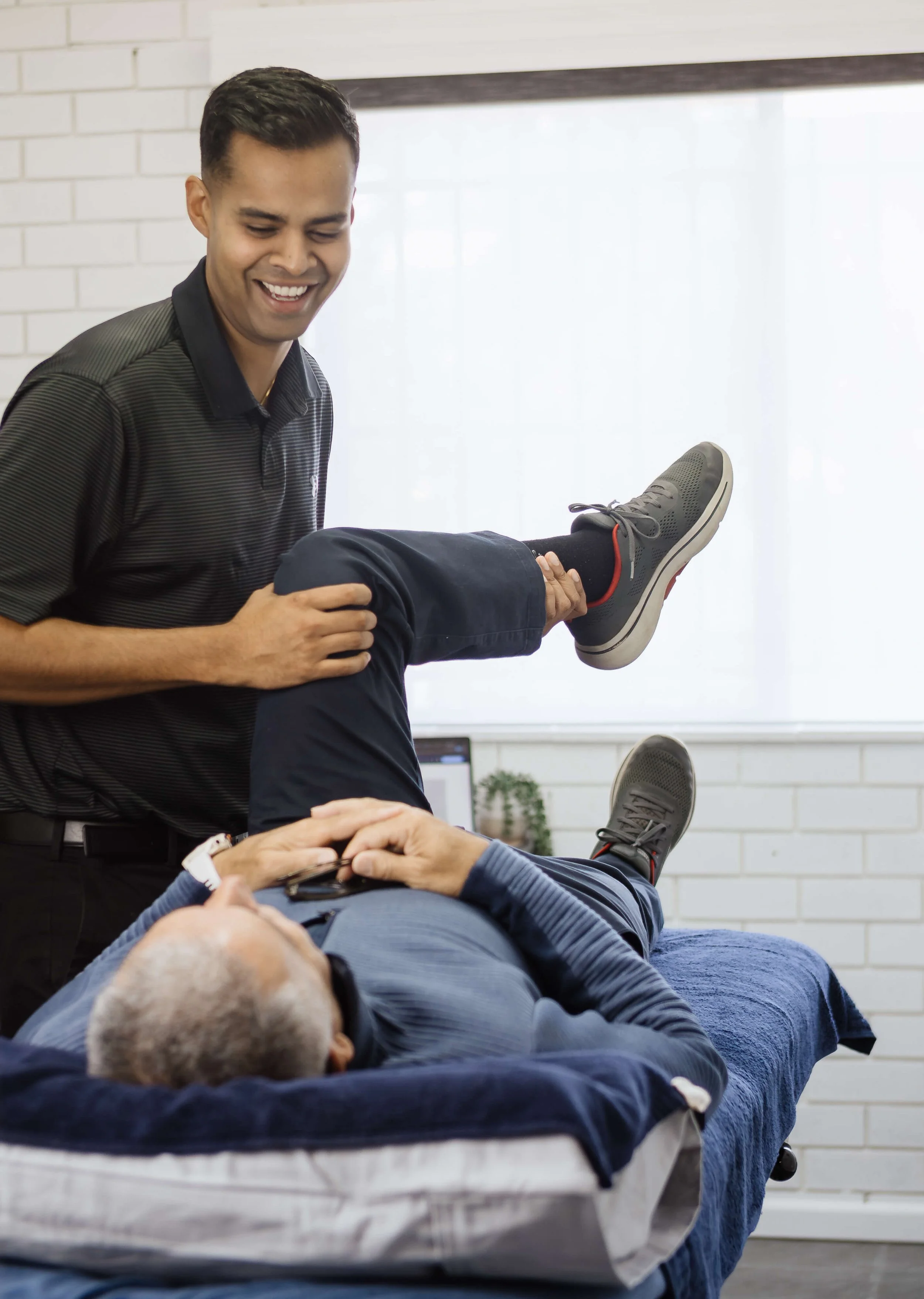
Manual Therapy Techniques We Use:
Joint Mobilisation
Slow, rhythmic, passive movement of stiff joints within their available range. Improves synovial fluid circulation (joint nutrition) and maintains mobility without stressing the joint.
Soft Tissue Release
Releasing tight muscles, fascia, and connective tissue around arthritic joints. This reduces pain and improves movement quality.
Muscle Energy Technique
You gently contract specific muscles against light resistance, then relax as we take the joint into its new range.
Counterstrain
Finding comfortable positions that calm hypersensitive joints and muscles. Particularly useful during flares.
Myofascial Release
Sustained pressure on fascial restrictions—the connective tissue that surrounds muscles and joints.
Articulation
Rhythmic movement of joints to improve mobility and reduce stiffness.
We avoid:
High-velocity thrust techniques (joint "cracking") on arthritic spines
Aggressive stretching of unstable joints
Any technique that increases your pain
Our 3-Phase Approach to Arthritis Care
Phase 2: Personalised Treatment
Your treatment plan is tailored to your type of arthritis, your affected joints, and your goals.
For Osteoarthritis:
Focus: Maintain mobility, reduce stiffness, strengthen supporting muscles
Joint mobilisation to stiff areas
Soft tissue release for tight surrounding muscles
Strengthening exercises for muscles that support arthritic joints
Stretching for areas that have become tight
Gait retraining if walking is affected
Activity modification advice
For Rheumatoid Arthritis:
Focus: Work around flares, maintain function, reduce muscle tension
Hands-on Techniques during active flares
More mobilisation between flares
Energy conservation strategies
Joint protection principles
Liaison with rheumatology team
For Spinal Arthritis:
Focus: Maintain flexibility, reduce referred pain, postural support
Thoracic and lumbar mobilisation
Spinal flexion/extension exercises
Postural re-education
Core strengthening (without stressing spine)
For Hand Arthritis:
Focus: Maintain grip strength and dexterity
Hand and wrist mobilisation
Soft tissue release to forearm muscles
Specific hand exercises
Advice on assistive devices if needed
For Hip & Knee Arthritis:
Focus: Maintain walking ability, reduce load, strengthen supports
Hip and knee mobilisation
Quadriceps, gluteal, and hip strengthening
Gait assessment and retraining
Balance exercises for fall prevention
Phase 1: Comprehensive Assessment (Your First Visit)
Your first appointment is 460 minutes. We need to understand your specific type of arthritis, how it affects you, and what you want to achieve.
We'll discuss:
Your diagnosis—what type of arthritis, which joints affected
Your medical history and current medications
Your pain patterns—when it hurts, what helps, what aggravates
Your goals—what do you want to be able to do?
Previous treatments and what has/hasn't helped
We'll assess:
Your joint range of motion—which joints are restricted
Your muscle strength and balance
Your posture and movement patterns
Your gait (how you walk)
Areas of muscle tension compensating for arthritic joints
We'll also:
Liaise with your GP or rheumatologist if appropriate (with your consent)
Review any relevant scans or test results
Discuss realistic expectations for osteopathic care
You'll leave knowing:
How osteopathy can help your specific situation
Your personalised treatment plan
What you can do at home to support your joints
Phase 3: Ongoing Care & Self Management
Arthritis is a long-term condition. Our goal is to help you manage it independently, with periodic check-ins as needed.
We equip you with:
Home Exercise Program:
Specific exercises for your affected joints
Stretches for tight areas
Strengthening for supportive muscles
Balance work for stability
Activity Modification Strategies:
Pacing—balancing activity with rest
Joint protection principles
Energy conservation techniques
Assistive device recommendations if helpful
Flare Management Plan:
What to do when pain increases
When to rest vs. when to gently move
When to call us for support
Long-Term Monitoring:
Regular check-ins to adjust your program
Early intervention if things change
Coordination with your medical team
Research: Does Osteopathy Help Arthritis?
While more research is always welcome, existing studies and extensive clinical experience support manual therapy for arthritis:
Knee osteoarthritis: Manual therapy combined with exercise provides better pain relief and function than exercise alone
Hip osteoarthritis: Mobilisation improves range of motion and reduces pain
Spinal arthritis: Manual therapy reduces pain and improves mobility in lumbar and cervical spine arthritis
Hand arthritis: Joint protection education and exercise maintain function
The key: Osteopathy works alongside your medical care—not instead of it. We're part of your team.
When to See an Osteopath for Arthritis
Book an appointment if:
Morning stiffness is affecting your day
Arthritis pain is limiting your activities
You're struggling with daily tasks (opening jars, walking, getting up from chairs)
You've stopped activities you enjoy due to pain
You want drug-free pain relief options
You're preparing for joint replacement surgery (pre-hab)
You've had joint replacement and want to optimise recovery
Seek medical attention if:
You have a hot, swollen, red joint (possible infection or acute flare requiring medical review)
You have new, unexplained symptoms
You're considering changing your arthritis medications
Arthritis Through the Ages
Younger Adults (30-50)
May have early osteoarthritis, post-traumatic arthritis, or inflammatory arthritis. Focus on maintaining active lifestyle, work capacity, and preventing progression.
Older Adults (60+)
Managing multiple joint involvement, maintaining independence, preventing falls. Focus on safe mobility, pain management, and quality of life.
Preparing for Joint Replacement
"Pre-hab" before knee or hip replacement improves outcomes. Stronger muscles before surgery mean faster recovery afterward.
After Joint Replacement
Osteopathy helps with:
Managing other joints now taking more load
Addressing compensatory patterns developed before surgery
Improving gait and function
FAQs
"I have osteoarthritis in my knees. My doctor says I'll eventually need replacements. Can you help in the meantime?"
1
Absolutely—and this is exactly the right time to see us. We can help you maintain mobility, strengthen the muscles supporting your knees, manage pain, and potentially delay the need for surgery. Many patients find they can stay active longer with good conservative care.
"I have rheumatoid arthritis and see a rheumatologist. Can I still see an osteopath?"
2
Yes—and many rheumatologists support osteopathic care as a complement to medical treatment. Especially during flares, and communicate with your medical team. Always let us know your current medications and any changes in your condition.
"Will treatment make my arthritis worse?"
3
No. Our techniques are specifically adapted for arthritic joints— within your comfortable range, and never forced. Most patients find treatment reduces pain and improves movement. If something doesn't feel right, we stop and adjust.
"How often will I need to come?"
4
This varies. Initially, weekly or fortnightly for a few sessions to address specific issues. Then we space appointments out as you improve. Many patients settle into a maintenance schedule—perhaps monthly or every 6-8 weeks—to stay on top of things.
"Is exercise safe with arthritis?"
5
Yes—appropriate exercise is essential for arthritis management. The right exercise strengthens supporting muscles, maintains joint mobility, and helps control weight (reducing joint load). We prescribe specific exercises for your condition and teach you how to do them safely.
Self-Management Strategies for Arthritis
Movement Principles
"Motion is lotion" —synovial fluid (joint lubricant) circulates when you move. Regular movement is better for arthritic joints than long periods of stillness followed by overactivity.
Pacing: Break activities into smaller chunks. Garden for 20 minutes, rest, then another 20 minutes—rather than two hours straight.
Listen to your joints: Pain during activity means stop or modify. Pain after activity means you did too much—adjust next time.
Heat and Cold
Heat (warm pack, warm bath) for morning stiffness, before exercise, for chronic aches
Cold (ice pack wrapped in towel) for acute flares, hot swollen joints, after activity
Joint Protection Principles
Use larger, stronger joints to carry loads
Avoid gripping too tightly
Spread load across multiple joints
Respect pain—it's telling you something
Maintain muscle strength to support joints
Simple Things You Can Try Today
While waiting for your appointment:
For stiff hands in the morning:
Soak hands in warm water for 5-10 minutes. Gently make fists and straighten fingers slowly. Repeat several times.
For knee stiffness:
Sit on a chair, straighten one leg in front of you, hold 5-10 seconds, lower slowly. Repeat 10 times on each leg.
For spinal mobility:
Sit comfortably. Slowly turn your head to look over one shoulder, then the other. Then gently tilt ear toward shoulder each side. Move within comfortable range—no forcing.
For hip comfort:
Lying on back, hug one knee gently toward chest, hold 20-30 seconds. Repeat other side. (Skip if this aggravates your hip.)
Remember: Gentle, regular movement throughout the day is better than one big session followed by hours of stillness.
Our Wantirna Location
We're conveniently located in Wantirna, serving:
Local suburbs: Wantirna, Wantirna South, Boronia, Bayswater, Knoxfield, Scoresby, Ferntree Gully, Rowville, Vermont, and surrounding Eastern Melbourne suburbs
Nearby landmarks: Westfield Knox, Wantirna Health, Eastland Shopping Centre, Aquanation
Parking: Free, easy-access parking available right outside
Don't Let Arthritis Steal Your Mobility
Arthritis may be part of your life—but it doesn't have to define it. With the right support, you can maintain your independence, stay active, and manage your pain effectively.
Our Wantirna osteopaths are here to help you move better and live well with arthritis.
📞 Call us today: (03) 9720 2640
📧 Email: niraj@nudgeosteopathy.com
📍 Visit: 6B The Mall, Wantirna VIC 3152
Have more questions? Visit our FAQ or Contact Us.
Related Conditions We Treat
Medical Disclaimer
This information is for educational purposes only and is not a substitute for professional medical advice, diagnosis, or treatment. Always seek the advice of your osteopath, physician, or other qualified health provider with any questions you may have regarding a medical condition.