
Posture Correction & Ergonomic Assessment in Wantirna
Have you caught a glimpse of yourself in a shop window and been surprised by how you're standing? Does your mother's voice echo in your head—"sit up straight!"? Do you finish each workday with an aching neck, tight shoulders, or a sore lower back?
Your posture is telling you something. It's time to listen.
At Nudge Osteopathy in Wantirna, we help people understand their posture, correct harmful patterns, and create work and living environments that support their bodies rather than breaking them down.
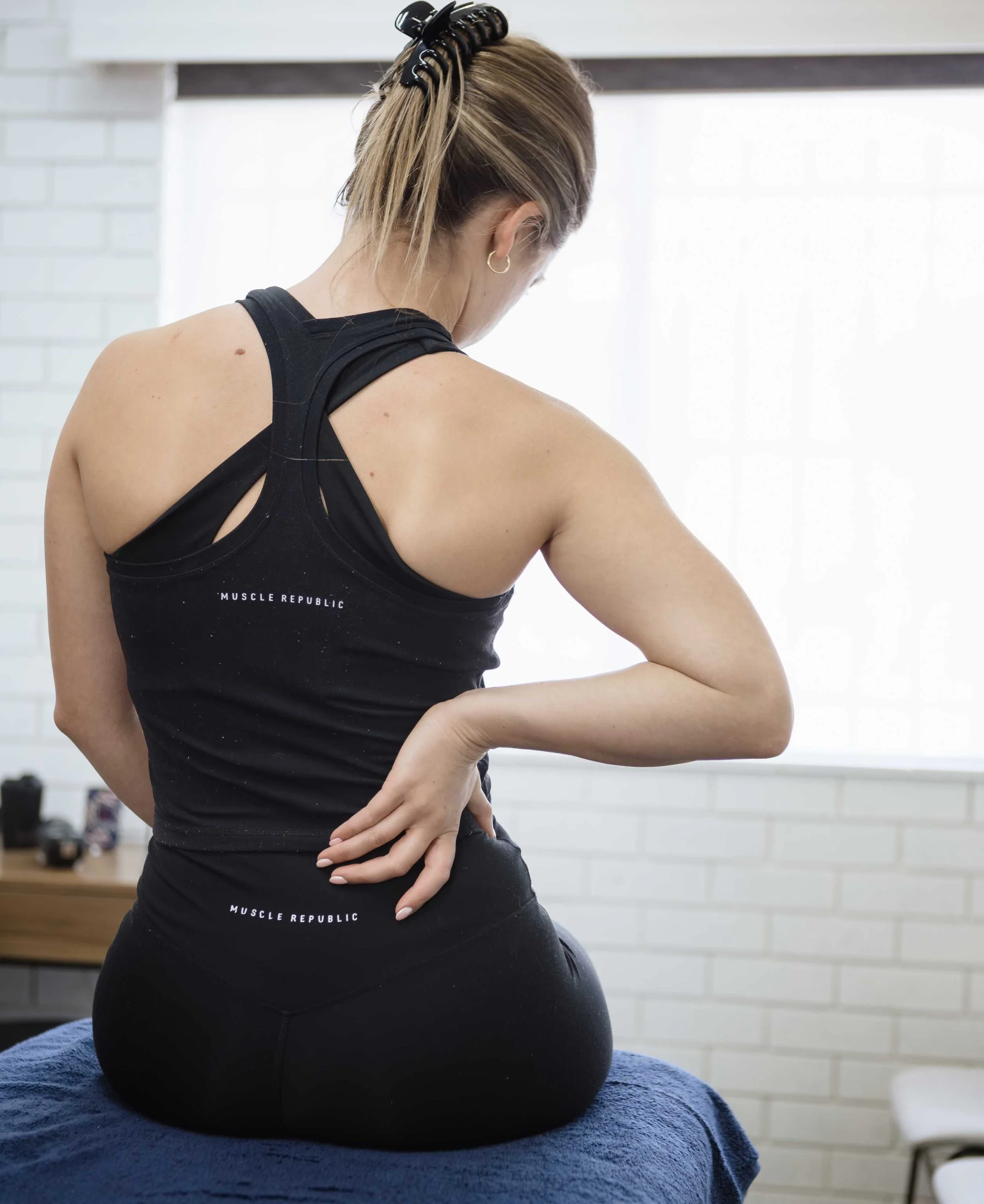
Why Choose Nudge Osteopathy for Posture & Ergonomics?
✅ Postural assessment—identifying the root causes of your pain
✅ Comprehensive ergonomic advice—workstation, car, phone, and beyond
✅ Practical, actionable solutions—not just theory
✅ Hands-on treatment to release tight, overworked muscles
✅ Exercise prescription to strengthen weak postural muscles
✅ Convenient Wantirna location—serving Knox, Boronia, Bayswater & Eastern suburbs
✅ HICAPS available—instant private health rebates
Understanding Posture: It's More Than "Sitting Up Straight"
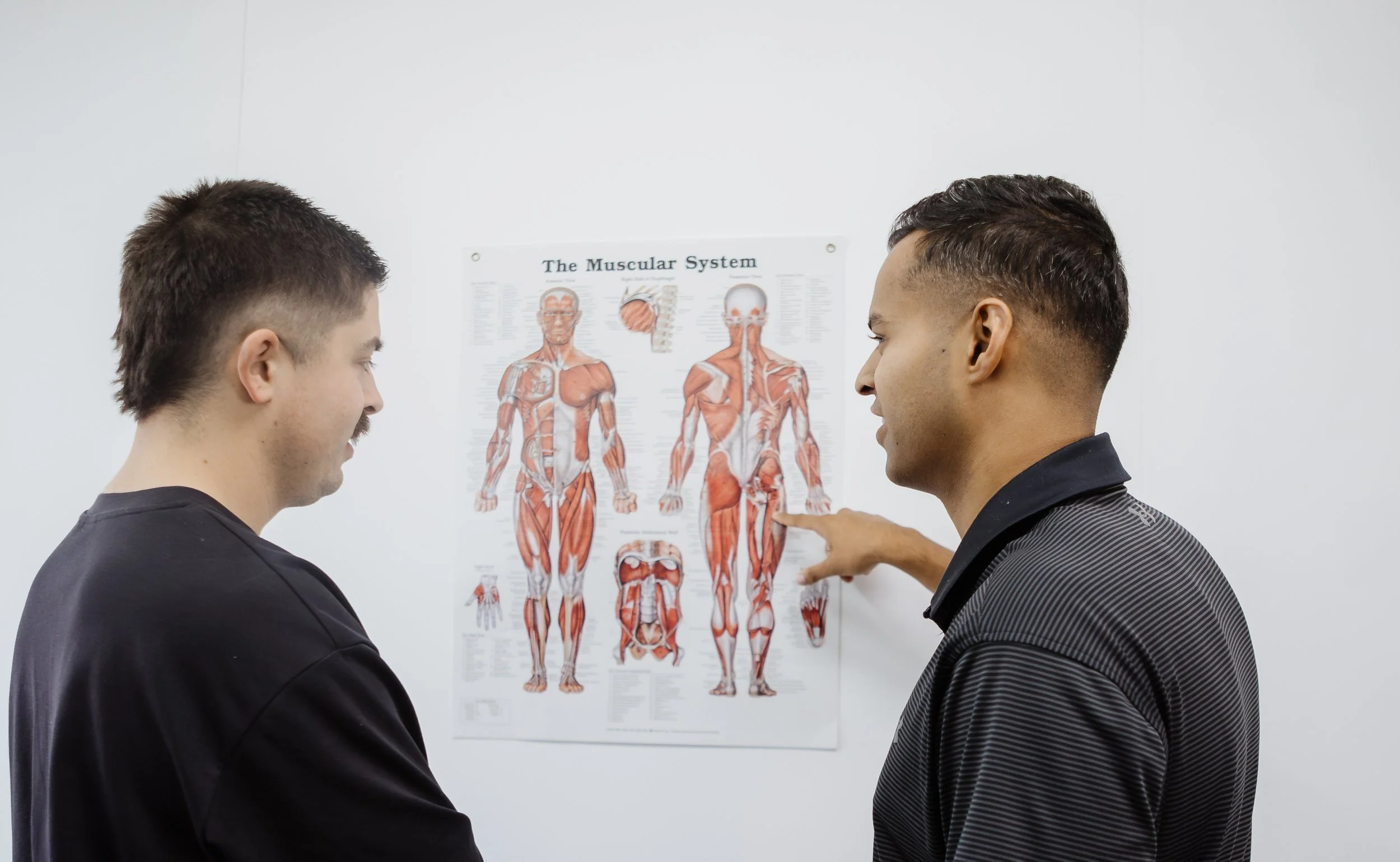
When most people think of posture, they imagine standing ramrod straight like a soldier on parade. But good posture isn't about rigidity—it's about efficiency.
Good posture means:
Your bones are aligned so muscles don't have to work overtime
Joints are in positions that minimise stress and wear
Your centre of gravity is balanced
You can move easily and efficiently
You can breathe freely
Poor posture means:
Some muscles are constantly overworking (and get tight and painful)
Other muscles are underworking (and get weak)
Joints are compressed, pinched, or unevenly loaded
Movement requires more effort
You're more prone to injury and pain
The Posture-Pain Connection
Muscle overload: When your head sits forward of your shoulders, your neck and upper back muscles must contract continuously just to hold it up. Your head weighs 4-5kg; for every inch it moves forward, the load on your neck muscles doubles.
Joint compression: Rounded shoulders compress the front of your shoulder joints. Slouching compresses the front of your spinal discs. Over years, this contributes to arthritis, disc problems, and joint dysfunction.
Nerve irritation: Poor posture can compress or irritate nerves—causing pain, numbness, or tingling down your arms or legs.
Breathing restriction: Slumped posture restricts your diaphragm and rib cage, leading to shallow breathing. This affects everything from energy levels to stress management.
Compensatory patterns: Your body adapts around poor posture. You develop tightness in some areas, weakness in others. These imbalances create pain and limit movement.
Common Postural Patterns We See
-
Your head juts forward, ears in front of shoulders rather than aligned. Chin pokes out.
Common causes: Computer work, phone use, driving, poor pillow support
Associated problems: Neck pain, upper back tension, headaches, jaw pain, shoulder tightness
-
Shoulders roll forward and internally rotate. Chest muscles tighten; upper back muscles weaken and lengthen.
Common causes: Desk work, driving, repetitive forward-reaching activities, certain sports (cycling, swimming)
Associated problems: Shoulder impingement, rotator cuff issues, neck pain, thoracic outlet syndrome, headaches
-
Pelvis tilts forward, exaggerating the curve in your lower back. Belly protrudes, buttocks stick out.
Common causes: Prolonged sitting, weak glutes and abdominals, tight hip flexors
Associated problems: Lower back pain, hip pain, hamstring strain, sacroiliac joint dysfunction
-
A combination of anterior pelvic tilt with weak deep abdominals and glutes, tight hip flexors and lower back muscles.
Common causes: Sitting-dominant lifestyle, inadequate core strength
Associated problems: Chronic lower back pain, hip dysfunction, sacroiliac pain
-
Pelvis shifts forward, upper body leans back to compensate. You look like you're standing with knees locked, hips forward, upper body leaning back.
Common causes: Habitual standing pattern, weak core stabilisers
Associated problems: Hip and knee strain, lower back pain
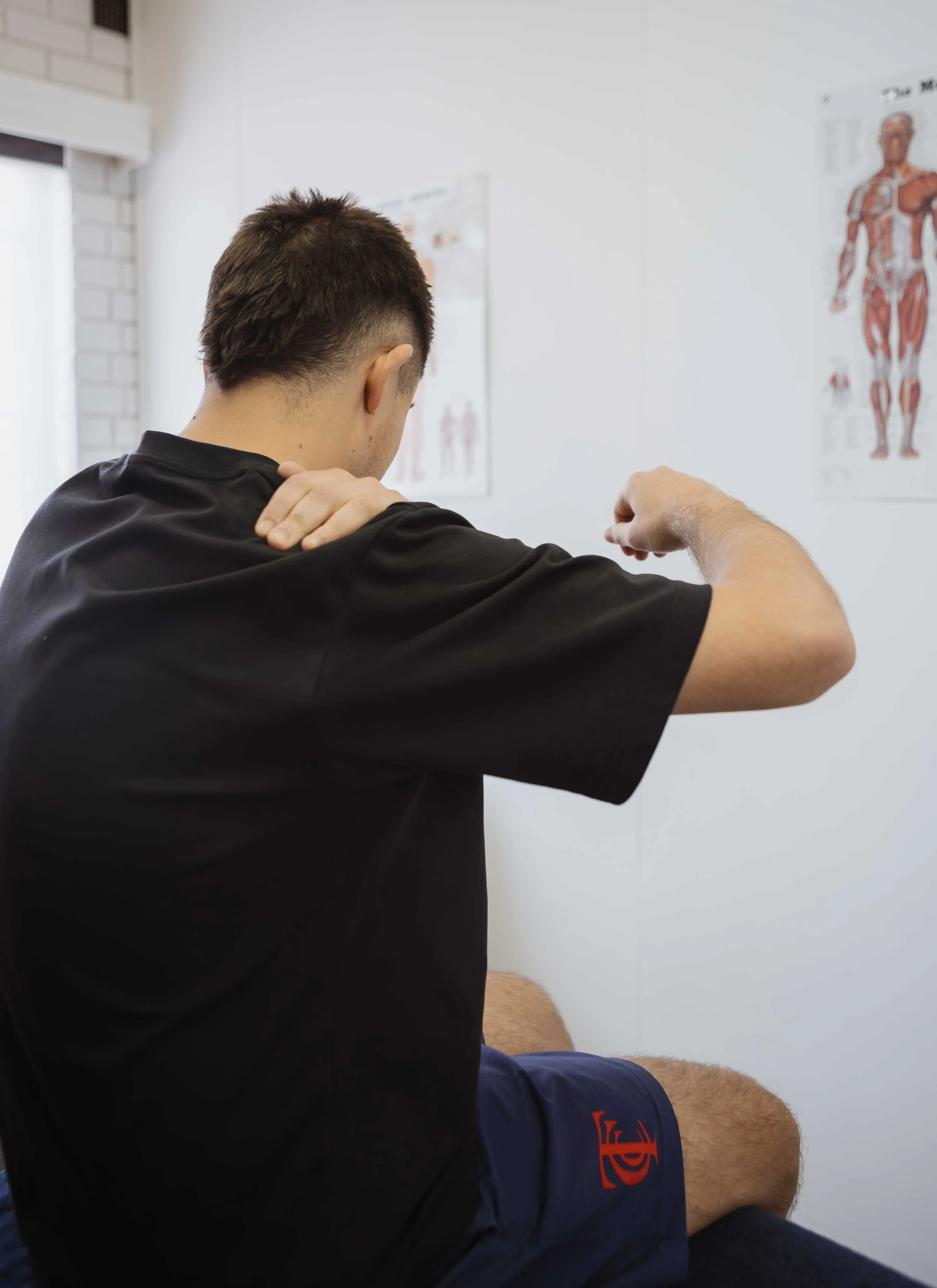
Common Posture in Modern Life: The Hidden Culprits Patterns We See
-
You spend 8+ hours at a computer. Your chair isn't quite right. Your screen is a little low. You reach for the mouse. By midday, you're slumped. By 3pm, your neck aches. By 5pm, you have a headache.
We see you. We treat you. We help you fix your setup.
-
Whether you commute or drive for work, hours behind the wheel take a toll. The seat is rarely ideal. You reach for the steering wheel. Vibration travels through your spine. You exit stiff and sore.
We assess your driving posture and help you modify it.
-
Carrying children, leaning over cots, pushing prams, sitting on the floor for play—then carrying them again. Your body adapts to these demands, often asymmetrically.
We help you protect your back while caring for your family.
-
Repetitive movements, awkward positions, heavy lifting. Your body develops predictable patterns—and predictable pain.
We treat the patterns and help you work smarter.
-
Hours hunched over books or laptops. Heavy bags carried on one shoulder. All at an age when postural habits are being set for life.
We help young people establish healthy movement patterns.
-
Age-related changes in spine, muscles, and balance affect posture. You may find yourself stooping forward or struggling to stand upright.
We help maintain the posture needed for independence and fall prevention.
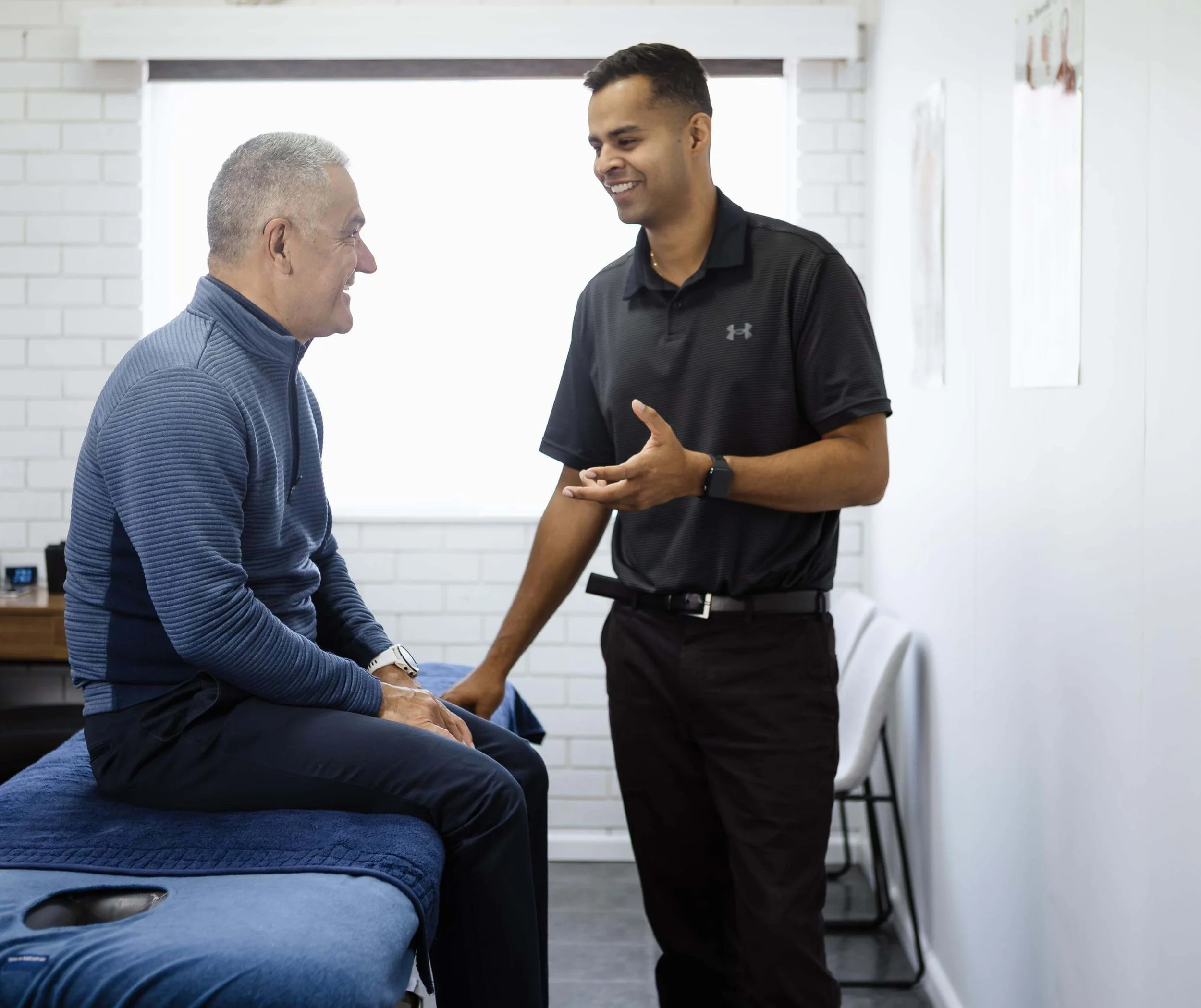
Our 3-Phase Approach to Posture & Ergonomics
Phase 1: Comprehensive Postural Assessment
Your first appointment is 45-60 minutes. We need to see you—how you stand, sit, move, and work.
We'll assess:
Static Posture (from all angles):
Head position—is it forward?
Shoulder position—rounded, elevated, uneven?
Spinal curves—are they normal, exaggerated, or flattened?
Pelvis position—tilted forward or back?
Hip, knee, ankle alignment
Weight distribution through feet
Dynamic Posture:
How you walk (gait analysis)
How you transition from sitting to standing
How you bend and lift
How you perform work-specific movements
Muscle Assessment:
Which muscles are tight and overactive
Which muscles are weak and underactive
Muscle length tests
Strength assessment
Range of Motion:
Joint mobility throughout your spine and extremities
Areas of restriction or hypermobility
Workstation Assessment (if relevant):
We'll review photos of your setup (bring them!)
Or discuss your work environment in detail
We may ask about your chair, desk, screen, keyboard, mouse, phone use
You'll leave knowing:
Your specific postural pattern
Which muscles are tight and which are weak
What's contributing to your pain
Your personalised correction plan
Ergonomic changes to make immediately
Phase 2: Personalised Treatment & Correction
Your treatment plan addresses both the symptoms (pain, stiffness) and the cause (postural dysfunction).
Manual Therapy:
Release Tight Structures:
Soft tissue therapy: Releasing overworked, tight muscles (upper traps, pectorals, hip flexors, etc.)
Myofascial release: Addressing fascial restrictions holding poor posture
Trigger point therapy: Deactivating hypersensitive points in muscles
Joint mobilisation: Restoring mobility to stiff joints (spine, ribs, shoulders, hips)
Prepare for Change:
Manual therapy alone won't fix posture—but it creates the conditions for change by releasing tight structures so you can then strengthen weak ones.
Exercise Prescription:
Strengthen Weak Muscles:
Deep neck flexors: For forward head posture
Lower trapezius and rhomboids: For rounded shoulders
Glutes and deep abdominals: For anterior pelvic tilt
Core stabilisers: For overall postural support
Stretch Tight Muscles:
Pectorals: For rounded shoulders
Upper trapezius and levator scapulae: For elevated shoulders
Hip flexors: For anterior pelvic tilt
Hamstrings: For certain postural patterns
Movement Retraining:
Chin tucks: The foundation exercise for forward head posture
Scapular retraction and depression: "Proud chest" without arching back
Pelvic tilts: Finding neutral pelvis position
Bracing: Activating deep core without holding breath
You'll receive:
A written home exercise program
Clear instructions and progressions
Demonstration and practice during your session
Phase 3: Ergonomic Optimisation & Habit Change
This is where we make your environment work for you, not against you.
Workstation Ergonomics:
Chair Setup:
Seat height—feet flat, knees at 90 degrees
Seat depth—2-3 finger gaps behind knee
Backrest—lumbar support positioned correctly
Armrests—allow shoulders to relax (or removed if they cause problems)
Desk & Screen:
Screen height—top of screen at or just below eye level
Screen distance—arm's length
Document holder—same height as screen if using paper
Standing desk options—if appropriate
Keyboard & Mouse:
Elbows at 90 degrees, shoulders relaxed
Wrists straight (not bent up or down)
Mouse close to keyboard—no reaching
Keyboard tray if desk is too high
Phone Use:
Headset or speakerphone for frequent calls
Not cradling phone between ear and shoulder
Beyond the Office:
Driving Posture:
Seat distance—reach pedals without stretching
Seat back—slightly reclined (100-110 degrees) not upright
Headrest—centred behind head, not pushing head forward
Lumbar support—if your car has it, use it
Breaks—stop every 60-90 minutes on long drives
Phone/Device Use:
Bring phone to face level, not face to phone
Take breaks every 15-20 minutes
Vary which hand holds the device
Sleep Posture:
Pillow height—maintains neutral neck position
Side sleeping—pillow between knees
Back sleeping—pillow under knees
Avoid stomach sleeping (twists neck)
Lifting & Bending:
Bend at hips and knees, not back
Keep load close to body
Brace core before lifting
Ask for help with heavy/awkward loads
FAQs
"I've had bad posture my whole life. Can it really be changed?"
1
Yes—but it takes conscious effort and consistency. Your posture is a habit, and habits can be changed. We'll give you the tools; you'll need to use them. Most patients see significant improvement within weeks to months of consistent work.
"Do I need a standing desk?"
2
Not necessarily. The best posture is your next posture. What matters most is varying your position throughout the day. If you sit all day, standing for some periods helps. If you stand all day, sitting helps. A sit-stand desk can be useful if you actually use it to change position regularly.
"Is there a 'perfect' posture?"
3
No. Perfect posture is a myth. What matters is:
Not staying in any one position too long
Having the capacity to adopt good posture when needed
Moving freely and without pain
"How long will it take to fix my posture?"
4
It depends on how ingrained your patterns are and how consistently you do your exercises. Some people feel improvement in weeks. Lasting change—where good posture becomes automatic—takes months of consistent practice. Think of it like learning any new skill.
"My work won't pay for ergonomic equipment. What can I do with what I have?"
5
Plenty. We can often make significant improvements with simple adjustments—raising your screen with books, adjusting your chair height, repositioning your keyboard, taking better breaks. Start with what you can control.
Our Wantirna Location
We're conveniently located in Wantirna, serving:
Local suburbs: Wantirna, Wantirna South, Boronia, Bayswater, Knoxfield, Scoresby, Ferntree Gully, Rowville, Vermont, and surrounding Eastern Melbourne suburbs
Nearby landmarks: Westfield Knox, Wantirna Health, Eastland Shopping Centre, Aquanation
Parking: Free, easy-access parking available right outside
Don't Let Poor Posture Become Chronic Pain
Poor posture is insidious. It doesn't hurt today, or tomorrow, but months and years of accumulated strain eventually demand attention.
You don't have to wait until you're in pain.
Our Wantirna osteopaths can help you understand your posture, correct problematic patterns, and create an environment that supports your body rather than breaking it down.
📞 Call us today: (03) 9720 2640
📧 Email: niraj@nudgeosteopathy.com
📍 Visit: 6B The Mall, Wantirna VIC 3152
Have more questions? Visit our FAQ or Contact Us.
Related Conditions We Treat
Medical Disclaimer
This information is for educational purposes only and is not a substitute for professional medical advice, diagnosis, or treatment. Always seek the advice of your osteopath, physician, or other qualified health provider with any questions you may have regarding a medical condition.